Why “smart” models still miss obvious solutions
You’ve probably seen it: an LLM can draft a clean summary of a roadmap doc, then immediately propose a fix that ignores a key constraint you stated two lines earlier. That isn’t “stupidity” so much as a mismatch between how the model generates text and how real work problems behave. Many tasks have hidden dependencies, ambiguous goals, and constraints that only matter when you hold them steadily across several steps.
Without structure, the model tends to grab the most statistically plausible next move, not the safest or most complete one. It will also optimize for a fluent answer, even when the right move is to ask a clarifying question or run a quick check. Adding step-by-step thinking can help, but it costs time and tokens, and it can still drift if the steps aren’t tied to explicit assumptions and verification.
What structured reasoning changes in real problem settings
A familiar pattern in product work is the “looks right” answer that fails the first contact with reality: a launch plan that doesn’t account for legal review lead times, or a pricing recommendation that forgets how sales compensation works. Structured reasoning changes this by forcing the model to externalize the moving parts—goal, constraints, stakeholders, unknowns—before it starts generating confident artifacts. You’re not asking for more words; you’re asking for a decision path you can inspect.
In practice, the biggest gain is error visibility. When the model decomposes a task (“list assumptions,” “enumerate options,” “predict second-order effects,” “propose a check”), you can spot the exact step where it made up a dependency or ignored a requirement. That makes it easier to correct with a targeted follow-up instead of re-prompting from scratch.
More structure means more prompting, longer outputs, and more review time. It’s worth it when the cost of a wrong answer is high or the problem has real constraints; it’s wasteful for simple drafts where speed matters more than rigor.
Choosing the right level of step-by-step detail
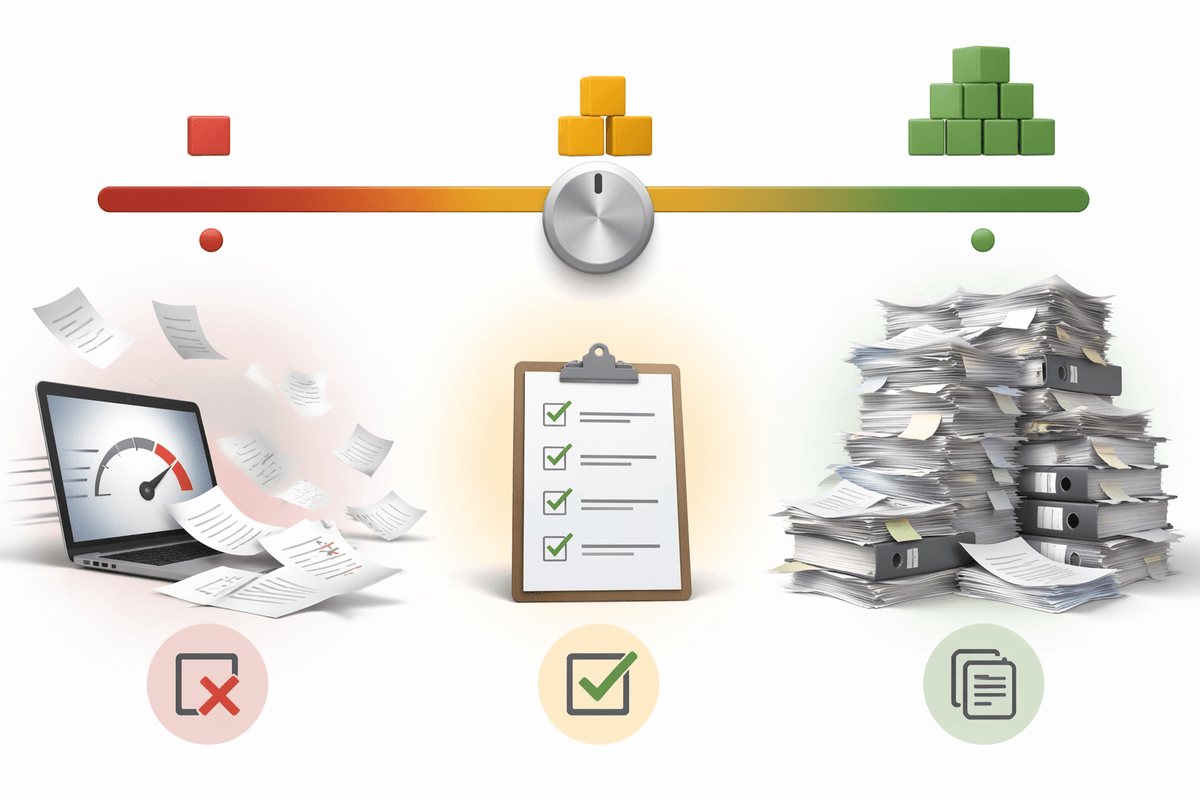
A common mistake is treating “step-by-step” as an all-or-nothing setting. If you force detailed reasoning for every request, you get bloated answers, higher token costs, and more to review—without proportionally better decisions. If you keep everything implicit, you get fast output that can quietly skip constraints. The useful move is to match the level of structure to the risk and ambiguity of the task.
For low-stakes work (rewrite this email, summarize this meeting), a light scaffold is enough: “state the goal in one sentence, then draft.” For medium-stakes work (product brief, experiment plan), ask for a short decomposition: assumptions, unknowns, and a numbered plan. For high-stakes work (pricing, compliance-sensitive launches, customer commitments), require checkpoints: “list constraints, propose options, pick one with rationale, then propose verification steps and what would change the decision.”
When you’re unsure, start minimal and escalate structure only after you see drift—missing constraints, invented facts, or shaky reasoning. That keeps speed when it matters, and adds rigor only when it pays for itself.
Prompt patterns that reliably produce better reasoning
A practical test is a model that gives you a confident plan without ever naming what it’s assuming. One reliable pattern is to force a “frame before solve”: “Restate the goal and constraints in 3 bullets. List key assumptions and unknowns. Ask up to 3 clarifying questions if needed.” That single move reduces the common failure where the model optimizes for a fluent artifact instead of a workable decision.
For decisions, use “options + trade-offs” prompts: “Generate 3 viable approaches. For each, list benefits, risks, dependencies, and the first week of execution. Then recommend one and explain what evidence would change your choice.” This prevents the model from locking onto the first plausible answer and gives you levers to negotiate with stakeholders.
For reliability, add a cheap verification step: “Now critique your answer: identify potential missing constraints, factual claims to verify, and edge cases.” These patterns add tokens and review time, so reserve them for work where a hidden mistake is more expensive than a longer prompt.
Making reasoning safer: checks, critiques, and verification
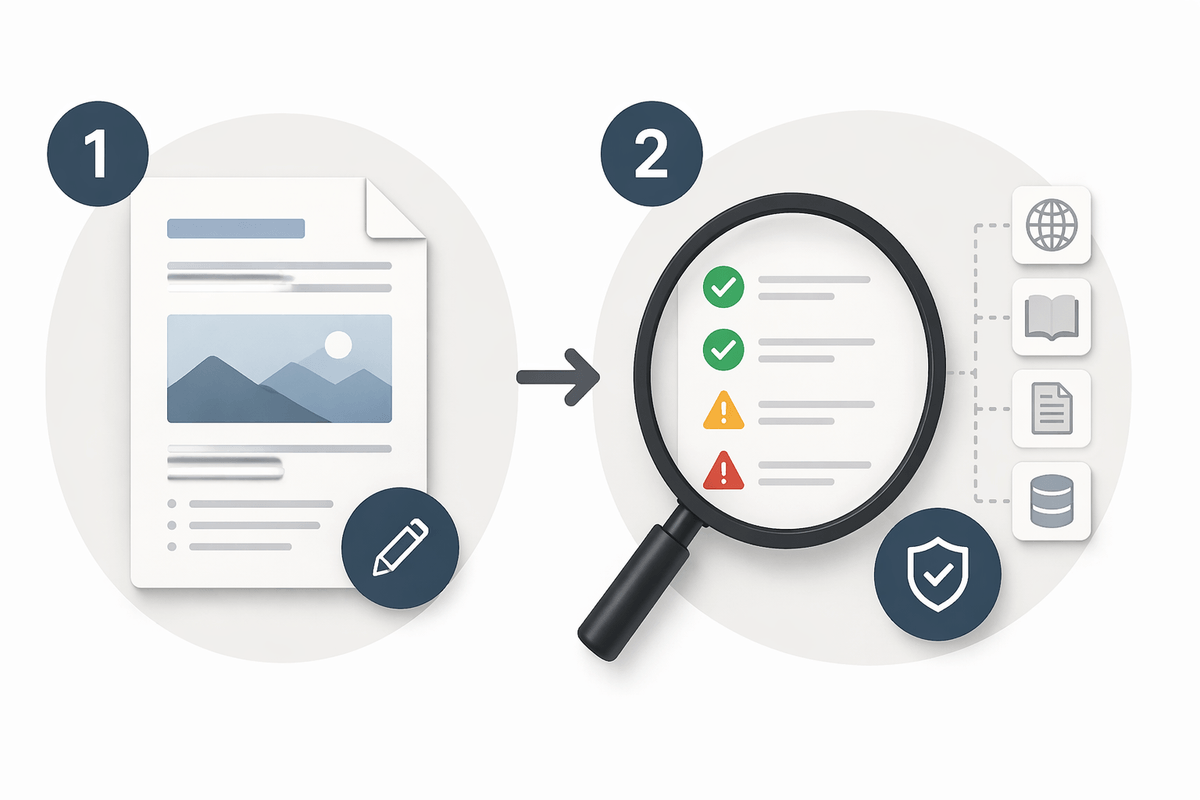
You’ve likely had the experience of shipping an AI-generated doc that reads well, then discovering one sentence that would derail execution: a made-up dependency, a missing approval step, an implied SLA you can’t meet. Safety here doesn’t mean “never wrong.” It means making it hard for quiet errors to survive into decisions.
A simple pattern is “separate propose from verify.” First, ask for the answer. Then force a pass that behaves like a reviewer: “List specific claims that need verification, what source would confirm each, and which assumptions would break the recommendation.” For plans, add a checklist prompt: “What could block this in legal, security, data availability, or staffing?” For numbers, require unit checks and boundary cases: “What happens if volume is 10× lower?”
The verification prompts add output and still require human judgment. Use them where the cost of rework is high, and keep the checks concrete enough that someone can actually follow them.
When structured reasoning backfires or gets gamed
A recognizable failure mode is when “structured reasoning” turns into performative structure: the model produces a tidy framework, but the framework is loosely connected to the actual constraints. You get five crisp steps, each plausible on its own, yet the plan still ignores the one dependency that matters (procurement lead time, data retention rules, a contractual term). The extra detail can also create false confidence—people stop questioning because it looks audited.
It can also be gamed by the prompt itself. If you demand a fixed number of steps, or insist on a specific methodology, the model will fill the template even when it should pause, ask a question, or say “insufficient information.” Worse, long chain-like outputs increase the surface area for subtle hallucinations: invented stakeholders, fake metrics, or “industry standard” claims that sound reasonable but aren’t sourced.
The operating rule: treat structure as a tool for inspection, not a guarantee of correctness. Keep steps short, require explicit uncertainty, and force at least one “what would invalidate this?” check so confident-looking scaffolds don’t slip into decisions unchecked.
Bringing it into workflows: from one-off prompts to habits
The easiest place to operationalize this is where inconsistency hurts most: recurring artifacts like PRDs, launch checklists, incident write-ups, and weekly decision memos. Turn your best prompts into reusable snippets with fixed slots (goal, constraints, assumptions, open questions, verification). The model’s job becomes filling a form you already trust, not inventing the frame each time.
Make the checkpoints part of “done.” For example: no recommendation without “what would change my mind,” no plan without a dependency list, no metrics without units and a sanity bound. The cost is real—more tokens and more review—so reserve the full version for decisions that create commitments.
Over time, you’re training your team, not the model: clearer inputs, earlier clarifications, and faster detection of quiet errors.