The complexity of IT environments is growing fast. Static solutions can't handle rapid change. Smart systems help IT teams manage this complexity efficiently. To unlock their full potential, they need smart training approaches. A continuous training loop keeps these systems learning and improving. It’s not enough to train once and forget. You must feed the system real-time data and track results. Smart systems adapt when exposed to evolving environments.
This guide covers continuous AI training, highlighting how to build, train, and deploy AI models that grow with your infrastructure. We explain how to automate intelligently, deploy safely, and train continuously. Our focus is on real performance and long-term value. With this strategy, you will reduce outages, cut costs, and improve IT responsiveness. You can gain a reliable system that works smarter every day. By the end, you will know how to create a model that never stops learning.
Understand the Role of AI for IT Operations
Modern IT teams rely on smart systems to manage scale and complexity. These tools detect anomalies and handle incidents before they escalate. This is more than just convenience; it is a competitive advantage. When integrated across your stack, smart systems improve uptime and reduce manual intervention. They study patterns in logs, metrics, and system behavior. With every cycle, they get better at identifying early signals. As IT systems become more dynamic, adaptability becomes crucial.
Smart platforms thrive on change, provided they receive regular updates and new inputs. Their impact grows when they are used across monitoring, alerting, and remediation. They do not replace humans; they make them more effective. Teams can focus on strategy while systems handle the noise. When appropriately trained, they provide clarity in chaos and drive operational excellence.
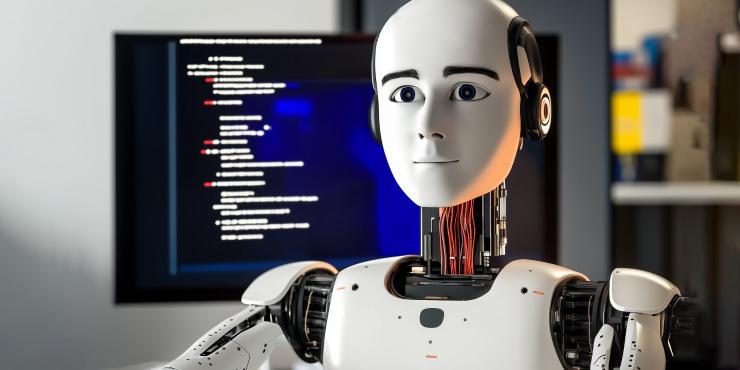
Implementing IT Ops automation with Machine Learning
Automation cuts waste and improves service delivery. Intelligent systems respond in milliseconds. Manual methods can’t compete. By analyzing historical data, automation systems develop a sense of cause and effect. They know what noise is and what’s critical. Over time, they optimize alerts, eliminate redundancies, and streamline operations.
When paired with learning models, automation gets smarter. It adapts to environmental shifts, scaling up or down as needed. Automation also improves compliance by documenting actions and timelines. IT teams gain better visibility and fewer surprises. Combined with alert intelligence, IT Ops automation improves incident resolution dramatically. The goal is fast, accurate, and consistent responses every time. With scalable automation, IT teams reclaim time and focus on innovation.
Best Practices for Training AI Models in IT Operations
Practical training begins with the correct data. Use logs, alerts, tickets, and incident records. Organize inputs based on environment, context, and outcome. Feed the model examples that reflect both normal and abnormal behavior. Include edge cases to improve decision boundaries. The goal is to give the model a comprehensive understanding of your environment. Track model output and performance from the start. Use a test set to validate model accuracy before deployment.
A/B testing helps evaluate new training sets in real scenarios. Regularly refresh datasets with recent events to keep the model sharp. Build feedback loops to improve performance with every run. Version models and track how changes affect behavior. Clean data, consistent labeling, and real-world variety are key. Review model predictions manually during the early stages. Adjust thresholds to manage sensitivity. Well-trained models identify root causes faster and help teams respond better.

Setting Up Continuous AI Training Pipelines
A continuous training loop is essential for smart systems. Start with a feedback mechanism that captures model performance. Link your training pipeline to monitoring tools and ticketing systems. It helps gather real-time results and failure patterns. Trigger retraining events when accuracy drops or systems evolve. Automate the process with clear triggers, not on arbitrary schedules. Use rolling datasets to maintain context across time. Include drift detection to identify when the model starts underperforming. Integrate a validation stage before the updated model is pushed.
Track metrics such as false positives, detection latency, and remediation time. These KPIs guide your training improvements. Continuous loops allow systems to adapt to new threats and anomalies. Use synthetic data and simulation if production data is limited. Document training cycles and improvement logs for audits. Continuous training aligns your model with your operations, always.
Strategies for Smooth AI Model Deployment in IT Ops
Deploying a model requires precision and foresight. Test extensively in a controlled environment first. Use mirrored infrastructure or sandbox setups. Monitor model behavior and system reactions. Deploy gradually, starting with low-risk environments. Enable rollback mechanisms in case performance degrades. Integrate the model into existing workflows and tools. Align with your alert management system to ensure seamless responses. Communicate clearly with your IT team before and after deployment.
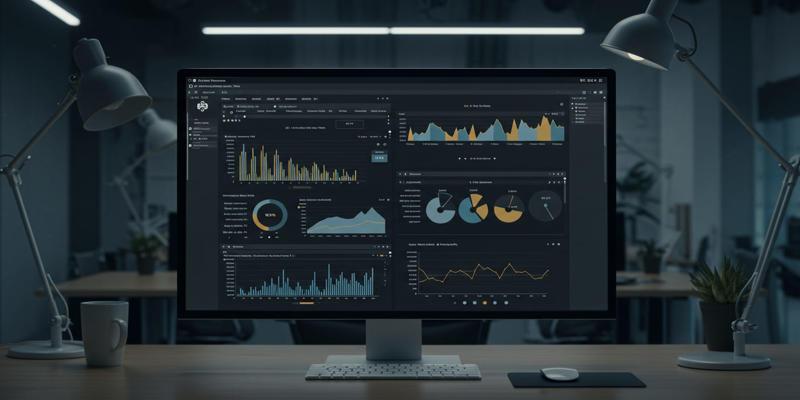
Provide documentation that explains model actions and confidence levels. Track system KPIs during and after deployment. Update dashboards to reflect new logic or outputs. Run post-deployment reviews to gather feedback and make adjustments. Avoid model updates during peak system load—schedule changes during low-traffic windows. A careful rollout builds trust and ensures lasting results for AI Model Deployment. Revisit your deployment checklist before every update.
Conclusion
Continuous model training transforms IT operations from reactive to predictive. One-time learning is no longer enough. Systems must evolve in sync with changing infrastructure. A feedback-driven loop ensures that your models remain relevant and practical. With the right pipeline, every failure becomes a lesson. Automation amplifies team capacity, reduces noise, and improves response times. Effective deployment turns a model into a reliable operator. Proper training, testing, and monitoring are essential. Keep humans in the loop to oversee, validate, and adjust.
FAQs
- What is the benefit of using smart systems in IT operations?
They improve detection, automate responses, and reduce downtime through data-driven insights.
- How does automation support IT operations?
It eliminates repetitive tasks, accelerates response times, and improves consistency.
- Why is continuous training essential?
It keeps the system aligned with real-time changes and maintains high accuracy.
- What data is used for training models?
System logs, alerts, historical incidents, and performance metrics are essential inputs.
- How do I ensure a successful model deployment?
Test thoroughly, monitor closely, use rollback plans, and align with existing workflows.