Why robot-assisted dressing is harder than it looks
A shirt sleeve looks simple until a robot has to guide it over an elbow without twisting the arm, pinching skin, or tugging on an IV line or catheter. The person may lean, tense up, or try to “help” at the wrong moment, and older skin can tear from forces that would barely register in a factory task.
Clothing is also unpredictable. Fabric stretches, folds, catches on fingers, and hides what the robot needs to see. Two shirts labeled the same size can behave differently, and zippers, buttons, and seams create hard edges. To be genuinely safe, the robot has to treat dressing as shared physical work, not a fixed, repeatable pick-and-place job.
Where injuries and near-misses actually come from
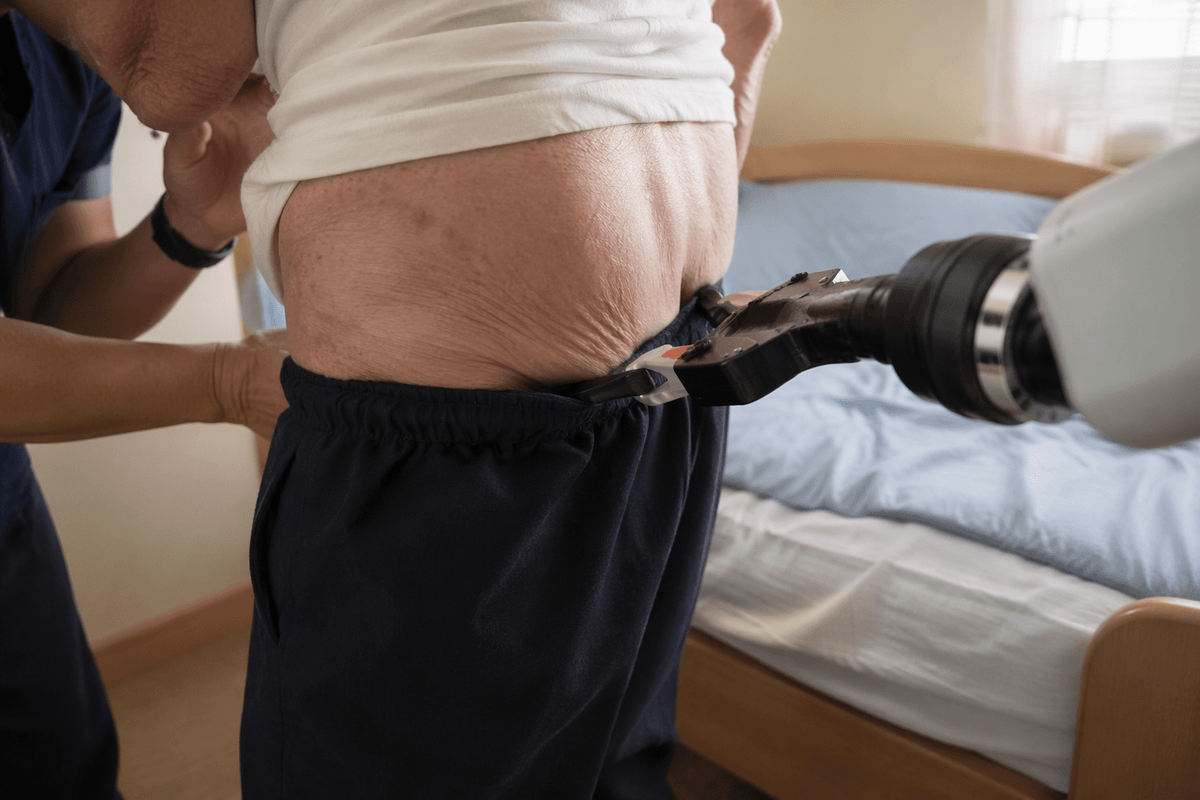
Most injuries in robot-assisted dressing don’t come from dramatic collisions. They come from small, repeated mistakes: a sleeve that catches on a thumb and turns into a tug, a waistband that drags across fragile skin, or a cuff that presses a bony wrist while the robot keeps “making progress.” Near-misses often start when the garment blocks the robot’s view, so it guesses where the hand or elbow is and applies force in the wrong direction.
A person shifts to relieve discomfort, reaches to help, or stiffens from anxiety, and the robot’s motion continues as if the body stayed still. Even a low-speed arm can create painful joint torque or shear on skin when the human is braced against a bedrail or wheelchair armrest. The practical challenge is that these risks show up in ordinary, messy moments, not lab-perfect trials.
Sensing the person: pose, pressure, and “I’m uncomfortable” cues
Watch what happens when someone tries to thread their own arm into a sleeve: they glance down, feel for the cuff, and stop the moment it pulls. A dressing robot needs the same layered feedback. Cameras can estimate limb pose, but fabric hides joints, blankets create shadows, and people don’t hold still. That’s why safer systems fuse vision with “touch” at the robot: force/torque sensing at the wrist, pressure or tactile pads on the gripper, and sometimes sensors in the garment or bed to detect shifting weight.
The key is recognizing discomfort early, not after a tug becomes pain. Useful cues include rising contact force, sliding friction on skin, unexpected joint resistance, a sudden posture change, or a spoken “wait” and facial grimace. The hard part is calibration: thresholds differ by person, fatigue, and medication, and better sensing adds cost, setup time, and cleaning requirements.
Soft contact by design: compliant arms and gentle grippers
A safe dressing robot is built to “give” on contact, not just to move slowly. Compliant designs add springiness through series-elastic actuators, torque-controlled joints, or passive flexures so the arm yields when it meets an elbow, shoulder, or bedrail. That matters because people reflexively tense or flinch, and rigid arms turn those moments into joint torque or skin shear.
Grippers need the same mindset. Instead of hard pinch points, safer end-effectors use wide, padded surfaces, fabric hooks that capture cloth without clamping skin, or suction/roller features that manage a sleeve like a continuous feed. The goal is distributing pressure and keeping the garment moving while contact stays low and predictable.
Softer hardware can reduce precision, struggle with thick seams or tight cuffs, and require more frequent maintenance and cleaning to keep padding, covers, and tactile skins hygienic.
Motion planning that respects joints, skin, and fabric behavior
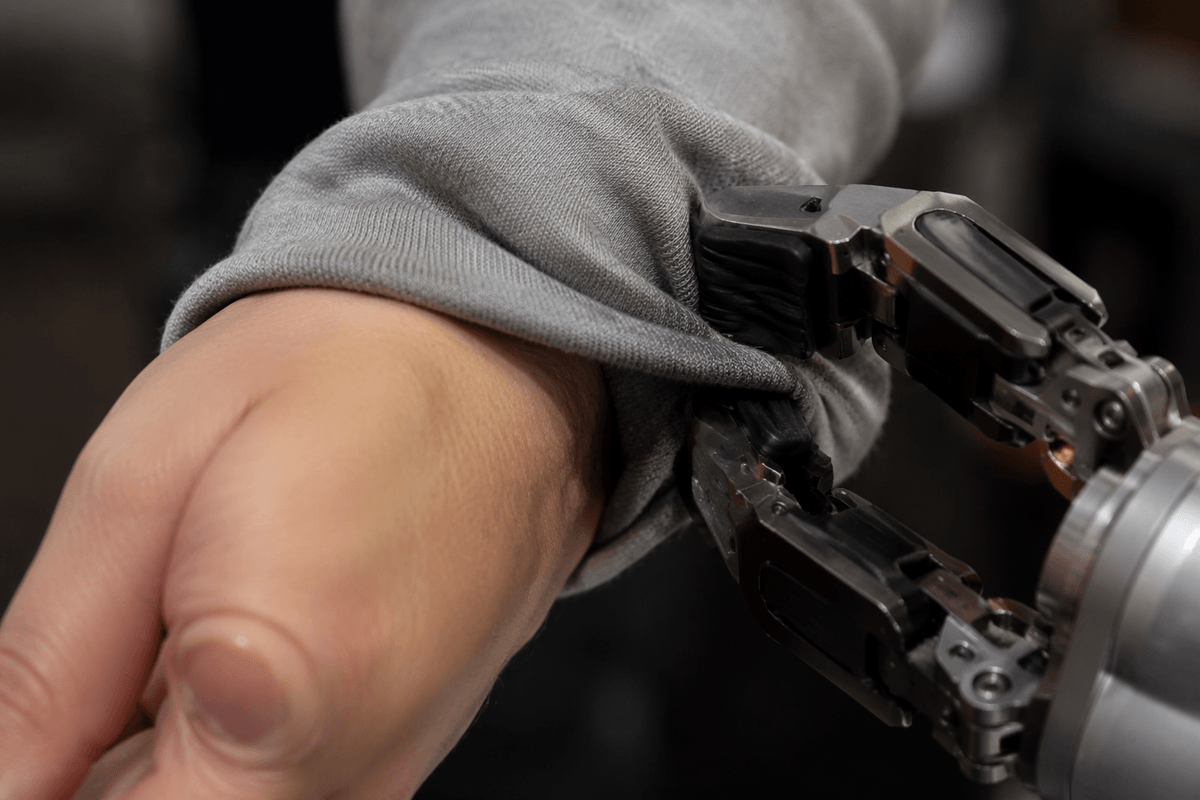
A caregiver doesn’t pull a sleeve in a straight line; they angle the fabric, rotate the wrist slightly, and pause to let the elbow pass. Safe motion planning has to copy that logic. The robot needs “no-go” directions that avoid twisting a shoulder, pushing a wrist into extension, or dragging fabric across thin forearm skin. Instead of a single planned path, better systems use short moves with frequent re-checks of pose and contact, so a small shift in the person’s posture doesn’t turn into a bigger joint torque.
Fabric makes planning harder because the robot is often steering something that deforms and hides the body. A sleeve can bunch, invert, or hook on a thumb, so planners watch for rising friction or stalled cloth motion and then back up, re-grasp, or change the approach angle. This adds time and complexity, and it can require per-garment setup—like marking seams, choosing grasp points, or rejecting tight cuffs that aren’t safe to automate.
Keeping the human in control without breaking the workflow
Anyone who has dressed a reluctant patient knows control is less about a big red stop button and more about small, continuous consent. A useful robot makes “pause,” “back up,” and “let me do this part” easy without forcing a full reset. That can look like a handheld switch, voice commands, or a caregiver foot pedal, paired with a “hold position” mode that relaxes contact force instead of freezing rigidly.
Shared control also means predictable handoffs. The robot can present an open sleeve at the right height, then wait for the person to thread their arm, or it can move only when the person leans or lifts in a specific way. The extra confirmations and micro-pauses improve safety, but they lengthen the task and can frustrate staff unless the interface is fast, glove-friendly, and reliable in a noisy room.
Proving it’s safe: testing, metrics, and deployment guardrails
A safe demo is not the same as a safe deployment. Dressing robots need evidence from tests that deliberately recreate the boring ways things go wrong: a sleeve snag, a sudden lean, a stiff elbow, a caregiver bumping the arm, or a change in friction from lotion or a dressing. Bench tests can measure peak and sustained forces, shear at the skin, joint torque, and how quickly the system detects a snag and backs off, but they should be paired with supervised trials on real people where discomfort is explicitly reported and logged.
Useful guardrails look practical: conservative force and speed limits by body region, automatic retreat on stalled cloth motion, “pause and re-grasp” rules, and clear criteria for when the robot refuses a garment (tight cuffs, hard seams, medical lines in the way). The cost is time—more test cases, more labeling of near-misses, and more staff training—before anyone can treat “safe” as a feature rather than a claim.
What safe robot dressing looks like in everyday use
In everyday use, “safe” looks like a robot that does the boring parts consistently: it presents the sleeve, opens fabric without snapping elastic, and advances only a few centimeters at a time while checking for snagging and rising contact. It talks through what it’s doing (“lifting your arm,” “sliding the cuff”), and it stops on plain language like “wait,” not just a button press.
The person stays positioned and supported first—feet, hips, and wheelchair brakes—before any pull on fabric begins. When a cuff catches, the robot backs up, re-grasps, and tries a new angle instead of powering through. A caregiver can take over instantly for the tricky steps (tight cuffs, buttons, medical lines), and the system treats that handoff as normal, not a failure.